
Blog
Production Model Breakdown: From Idle Talent To Continuous Value
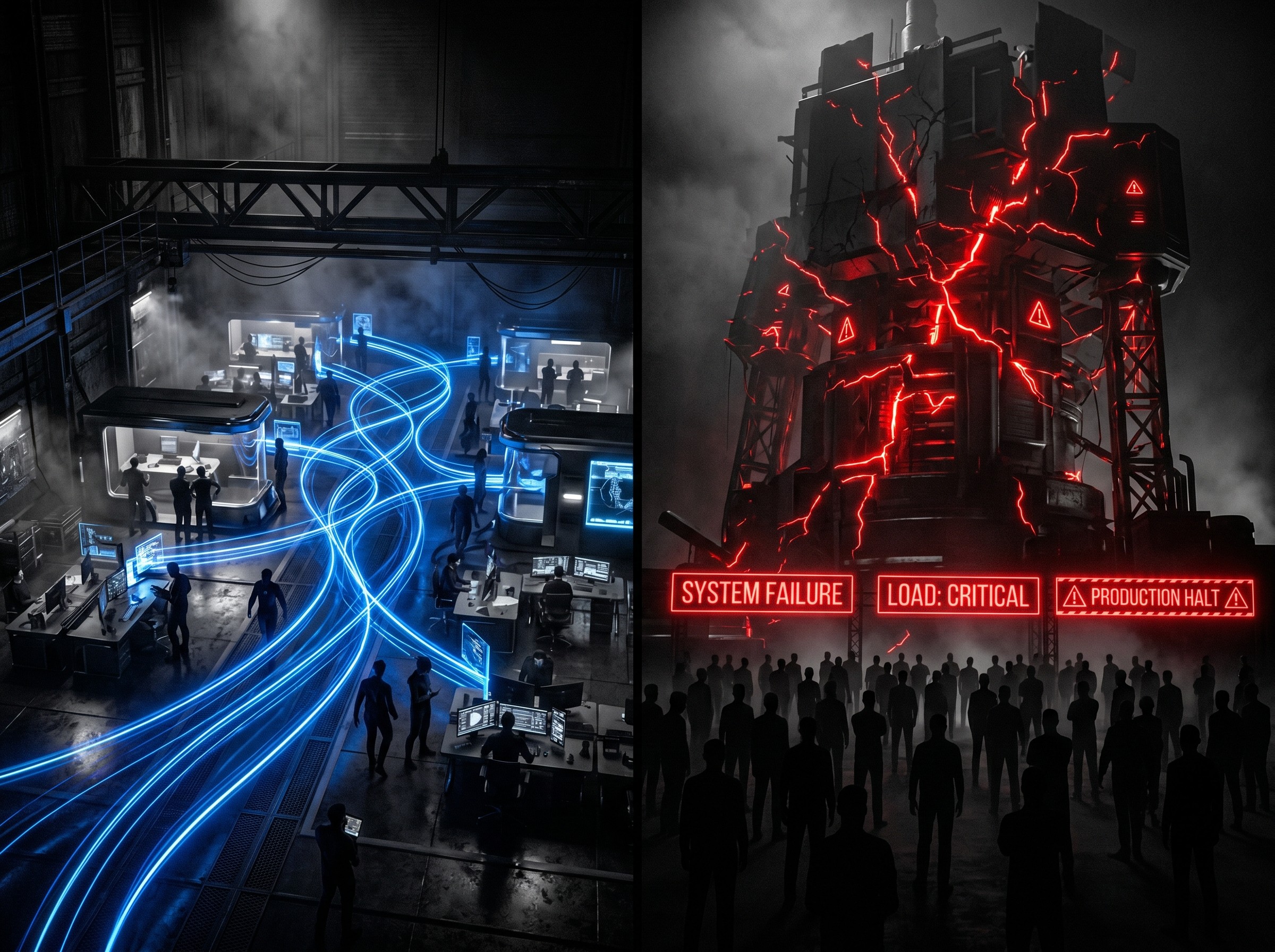
Epic just laid off 1,000 people, and now their Chief People Officer is leaving. Honestly? That’s not just an HR story. It’s a production model cracking under very real pressure.
Most game studios still structure their teams around a single product.
So when demand shifts or a project hits a rough patch, people don’t flow to new, high-priority work — they just wait. And waiting is incredibly expensive. You’re paying senior talent not to contribute, while the pressure to cut costs keeps rising. So leadership slashes headcount. Not because the talent isn’t needed, but because the organisation doesn’t know how to keep that talent continuously deployed.
And this hits senior people the hardest. The very individuals who hold deep context, make faster, better decisions, and keep entire production systems from collapsing. Their idle time costs more than a junior’s downtime — it actively degrades stability and speed.
The real inefficiency in game production isn’t headcount. It’s the idle time between meaningful contributions.
Yet most companies have no real handle on how to manage that.
In external production, my teams and I had to solve this early. We simply don’t have the luxury of people sitting on the bench. So we built a model where senior teams move fluidly across projects — continuously contributing, continuously generating value, without waiting for the next greenlight.
Same incredible talent. Radically different deployment model. That’s the actual shift. It’s not outsourcing. It’s not cost-cutting dressed up as strategy. It’s a fundamentally different way to structure production itself — one designed for resilience, not just for one hit.
Because the question isn’t “How many people do you have on payroll?” anymore. It’s “How continuously are they creating value?” That’s what will separate the studios built to last from the ones forced into the next painful round of layoffs.