
Blog
Devil Wears Prada 2 isn’t about fashion. It’s about losing human value to AI & metrics.
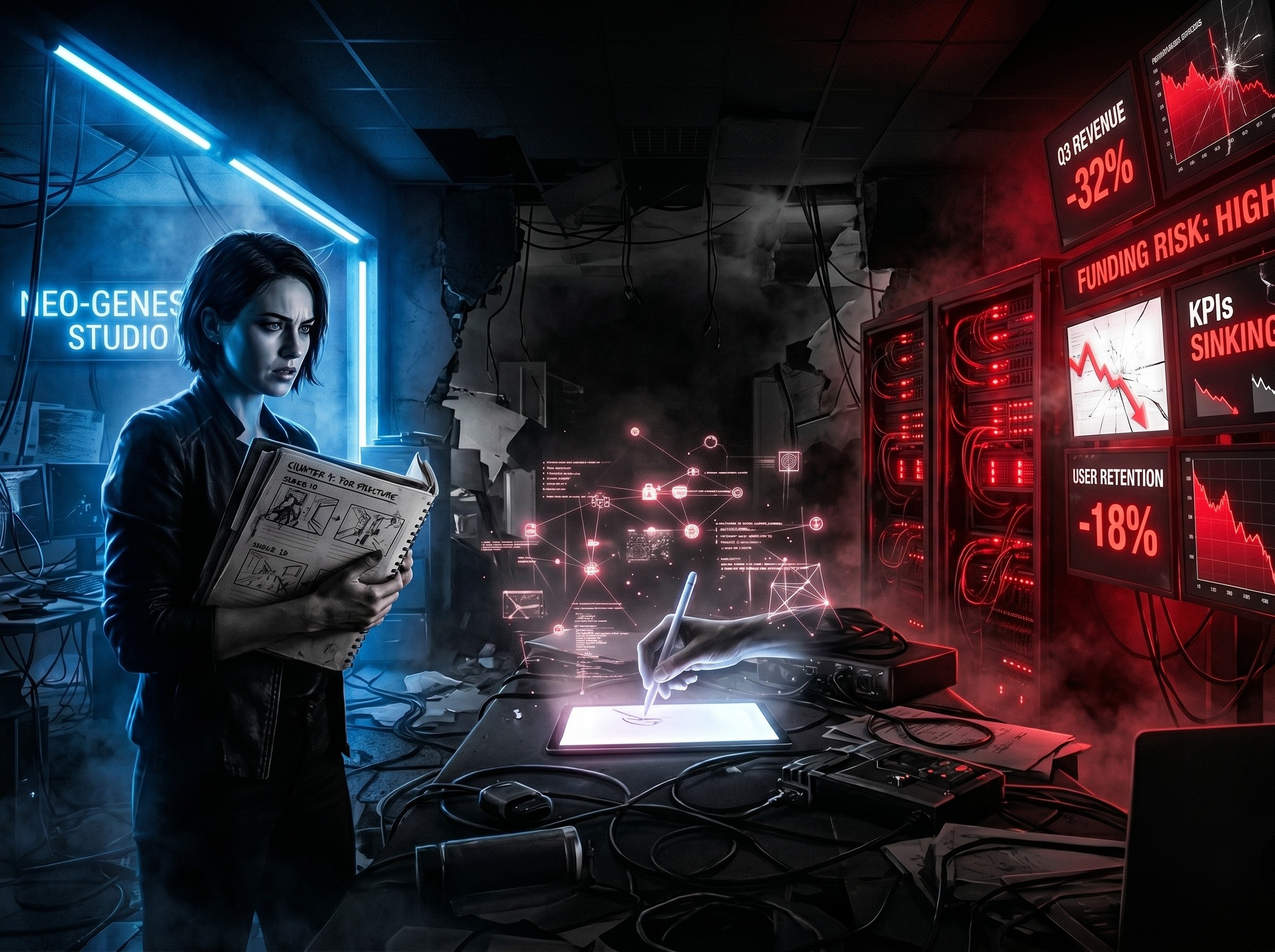
Why “The Devil Wears Prada 2” Hit Me Harder Than Any Game Industry Report
I went into “The Devil Wears Prada 2” expecting nostalgia. Maybe some glamorous fashion moments. But what I got was completely different – and honestly, it shook me as a studio CEO.
This Isn’t a Fashion Movie. It’s About Our Industry.
The film isn’t trying to recreate the magic of the original. Instead, it’s a painful, deeply modern reflection on what’s happening right now to human labor, art, and culture under technological pressure. Sound familiar? It should. That’s exactly what’s happening in game development.
When Innovation Crushes the Human
The scene that really got under my skin? Watching Meryl Streep’s character, Miranda Priestley, have innovation violently crash down on her. She barely resists until the very end. There’s something terrifyingly honest about that.
Miranda is no longer the untouchable queen of magazines. She’s a person watching an entire value system dissolve under the weight of algorithms, investors, and the attention economy. Replace “magazines” with “AAA game studios,” and you’ve got our reality.
Those Glowing Office Windows Are Our Studios
The film’s final shots show glowing office windows in New York. That’s not just about journalism or cinema. That’s game development too. Technology has hit all of us with the same force.
People keep telling us that culture can be optimized, replaced, sped up, and made cheaper. The film quietly rebels against that idea. And that’s why it works.
What Is Human-Made Art Actually Worth?
The film gives a striking answer:
it’s priceless. It might be the greatest thing humanity has ever created.
One of the strongest moments is when Miranda nearly breaks down. She’s facing investors who see culture as a temporary asset – easily replaceable, not worthy of long-term investment. In that moment, the film stops being about fashion entirely. It becomes a statement about civilization itself. About how easily mediocrity, armed with capital and technology, starts dictating terms to people who are creating something real.
The Hard Truth: Victory Is Temporary
In this chapter, Andy and Miranda overcome that wave of mediocrity through almost inhuman effort. They choose their own patrons instead of surrendering. But the film is honest enough to admit this world is temporary. The victory doesn’t feel permanent. It feels like a brief delay before the next wave hits.
My Takeaway for Game Studio Leaders
And that’s exactly why this film works so powerfully. It’s not about fashion. It’s about the fear of losing what is human in an era where everything is turning into flowcharts, metrics, optimization, and automation.
As leaders, we have a choice. Do we optimize until nothing human remains? Or do we fight for the art that actually matters? I know which side I’m on.